The creator economy has made it possible for platforms to work with people almost anywhere in the world.
A designer in Poland can sell assets to customers in the United States. A video creator in Indonesia can participate in a campaign run by a European company. A community contributor in Brazil can earn incentives from a platform headquartered thousands of miles away.
Connecting creators is easy.
Paying them efficiently, especially when the amount is small, can be much harder.
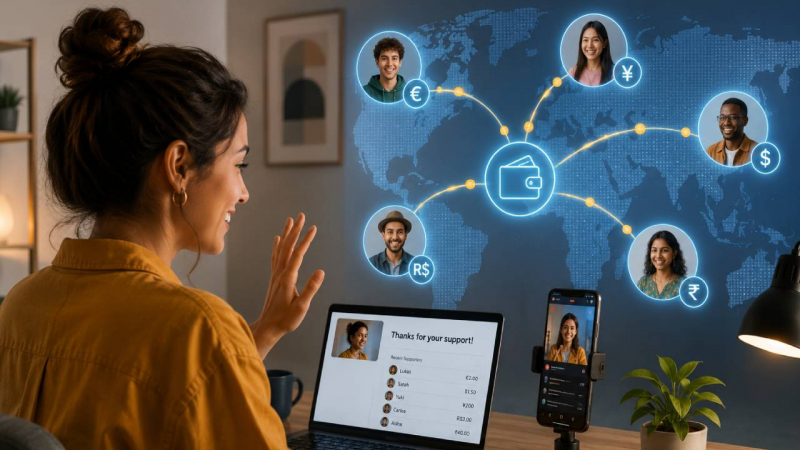
Why Micropayments Are Difficult
Traditional payment systems are optimized for moving money, but small international transactions can introduce friction.
Platforms may encounter processing fees, minimum withdrawal amounts, banking requirements, currency conversion issues, or recipient onboarding processes.
These problems are manageable when someone is receiving hundreds or thousands of dollars.
They become much more noticeable when a platform needs to distribute $5, $10, or $25.
Imagine a marketplace that wants to reward 10,000 creators with a $10 bonus.
The program represents meaningful value overall, but every individual payment is small.
That creates a classic micropayment problem.
Creator Platforms Need Flexible Payout Options
There is no single payout method that works perfectly for every creator.
Traditional transfers remain appropriate for regular earnings and larger balances.
But smaller bonuses, incentives, campaign rewards, and promotional payouts may benefit from alternative approaches.
One option is integrating a creator payout API that allows platforms to distribute digital rewards programmatically.
Instead of processing each incentive manually, the platform can connect reward delivery to events inside its own application.
Digital Rewards Can Complement Cash
Digital gift cards and similar products should not necessarily replace standard creator payments.
Instead, they can become an additional payout option.
Consider several scenarios.
A creator receives normal monthly earnings through the platform's existing payment provider.
After reaching a milestone, the creator receives a $20 digital reward.
Another creator participates in a promotional campaign and receives a small incentive immediately after completing the required activity.
A marketplace might similarly use rewards for referrals, bonuses, competitions, or community contributions.
The payout method can change depending on what the payment represents.
Real creator platforms already need to account for country-specific payment availability. Patreon's international payout guidance illustrates how payout currencies and methods can vary for creators outside the United States.
Automation Is Essential at Scale
Manual fulfillment works poorly for creator platforms because recipient numbers can grow rapidly.
When payouts depend on platform activity, they should ideally be connected to that activity automatically.
For example:
A creator completes a qualifying campaign.
The platform verifies the completion.
The creator's country and reward value are identified.
An appropriate digital product is requested.
The creator receives the reward.
The transaction is recorded inside the platform.
Once implemented, the same workflow can process ten transactions or tens of thousands.
Localization Is Just as Important
Global creators do not all use the same retailers or services.
A useful reward in one country may be impossible to redeem in another.
Platforms therefore need to think locally even when operating globally.
Providing region-appropriate digital products can make rewards more practical for recipients.
It can also help platforms avoid the awkward experience of issuing an incentive that technically has value but cannot realistically be used by the person receiving it.
Instant Rewards Can Improve Engagement
Timing also matters.
Creator platforms depend heavily on engagement.
When incentives are delivered close to the action that earned them, the relationship between effort and reward becomes much clearer.
A creator who completes a campaign and immediately receives an incentive experiences the reward differently from someone who receives the same incentive several weeks later.
For smaller bonuses in particular, rapid fulfillment can make the experience feel more responsive.
What Platforms Should Evaluate
Before adding another payout method, creator marketplaces should consider several factors.
Coverage is important. Does the solution support the countries where creators are located?
Product selection matters as well. Are there rewards that recipients will genuinely want to use?
Platforms should also evaluate integration options, operational visibility, transaction tracking, currencies, security, and the process for handling failed or refunded orders.
The objective should be to reduce complexity rather than introduce another disconnected system.
Building a Multi-Rail Payout Strategy
The future of creator payments probably will not be based on one universal payout method.
Instead, successful platforms are likely to use multiple rails.
Traditional payment infrastructure can handle primary creator earnings.
Digital rewards can handle smaller incentives, bonuses, referral rewards, and promotional payouts.
Other methods may serve creators in markets with different financial infrastructure.
By matching the payout method to the transaction, platforms can reduce friction while giving creators more flexibility.
The creator economy is inherently global.
Its payout infrastructure needs to become equally adaptable.
Post Comment
Share your thoughts about this article.
Be the first to post a comment!